Best Toys Under $25: What to Look For at Every Age
Kwik-E Deals is reader-supported: some links may earn us a commission at no extra cost to you. Learn more.
A great toy doesn't have to be expensive. Some of the most-played-with things in any house are inexpensive: a set of blocks, a deck of cards, a ball, a box of art supplies. If you're shopping for a birthday, a stocking, or a classroom gift exchange with a budget around $25, you have plenty of good options.
This guide isn't a list of specific products (prices and stock change too fast for that). Instead, it's a framework for picking well at each age, so you can look at any deal and quickly decide whether it's a winner. For live examples, check the current related deals at the bottom of this page or our toys page.
First, three rules for every age
- Check the age label and the safety warnings. Age grades on packaging aren't just about skill; they often reflect choking hazards and other safety concerns. Small parts, button batteries, and magnets deserve special care around young children.
- Favor open-ended play. Toys that can be used many different ways (building sets, art supplies, pretend-play kits) tend to hold attention longer than toys that do one thing when you press a button.
- Think about the parents. Very loud toys, thousand-piece glitter kits, and anything needing a stack of batteries may not be appreciated by the household receiving them.
Babies (under 12 months)
At this age, play is about the senses: looking, grabbing, mouthing, shaking, and hearing cause and effect. Good budget picks include soft books, high-contrast cards or books, rattles, stacking cups, and simple textured toys.
Look for: washable materials, no small detachable parts, sturdy seams on fabric toys, and items labeled for the right age range.
Skip: anything with long cords or strings, loose small pieces, or toys with accessible battery compartments.
Toddlers (1–3 years)
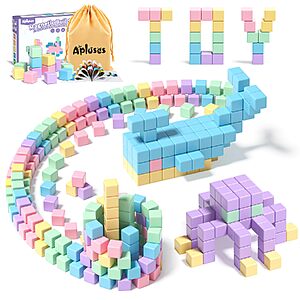
Toddlers are little scientists. They love filling and dumping, pushing and pulling, stacking and knocking down. Chunky building blocks, shape sorters, push toys, simple wooden puzzles with knobs, toy vehicles, and first pretend-play sets (a toy kitchen accessory set or a doctor kit) are all great.
Look for: big pieces, durable construction, and toys that invite repetition. Toddlers learn by doing the same thing many times.
Skip: complex electronic toys that do the playing for the child, and anything labeled 3+ due to small parts.
Preschoolers (3–5 years)
Imagination takes off at this age. Pretend play, simple board games, and early building sets shine. Consider dress-up items, play figures and animals, large-piece construction sets, beginner puzzles, play dough, crayons and washable markers, and first cooperative board games where everyone wins or loses together.
Look for: toys that combine with things the child already has, so a figure set that works with existing blocks or a play kitchen accessory set adds a lot of value at a low price.
Skip: games with complicated rules or long play times; frustration ends play fast.
Early school age (6–8 years)
Kids this age enjoy challenges and collecting. Building sets with instructions, card games, craft kits, beginner science kits, sports gear like a new ball or jump rope, and collectible figures are popular choices.
Look for: a clear "finish line." A craft kit that produces something they can show off, or a building set they can complete in an afternoon, feels rewarding.
Skip: overly messy kits unless you know the parents are fans, and items that need adult help at every step.
Tweens (9–12 years)
Tweens often have specific interests, so the best gift usually ties into a hobby: a building set based on a favorite theme, a strategy card game, a model kit, art supplies a step up from kids' versions, a puzzle with a challenging piece count, or accessories for a sport or instrument they already enjoy.
Look for: "grown-up" quality. Tweens notice when something feels babyish. A smaller set from a well-known building brand often goes over better than a big no-name set.
Skip: guessing at trends. If you're unsure, a gift card or a classic strategy game is a safe bet.
Teens and "kids at heart"
The $25 range covers a lot of fun for older kids: party games, card games, puzzles, small building sets aimed at adults, desk gadgets, and fandom collectibles. Many families also love games everyone can play together.
How to stretch a $25 budget
- Watch for multi-buy promotions. Toy sales often include "buy one, get one" or "spend more, save more" offers in the run-up to the holidays. Grouping gifts for several kids can make those offers worthwhile.
- Use price history. Popular building sets and games go on sale regularly; if a price looks high, it may drop again soon. See our guide on spotting real price drops.
- Add a small extra. A $15 toy plus a book or a pack of art supplies can feel more generous than a single $25 item.
- Think beyond toys. Experiences (a pass to a local museum, a craft class) can be great gifts too.
Final check before you buy
Read the listing carefully: confirm piece counts and dimensions (product photos can make items look bigger than they are), check whether batteries are included, and make sure the seller is reputable. If you're buying for the holidays, also check our holiday toy shopping timeline so you don't miss shipping cutoffs.
Happy hunting, and remember that the toy a kid plays with for months is a better deal than the flashy one forgotten by New Year's.